It’s Not the Charcoal. It’s the Fat.
It’s not the charcoal. It’s the fat.
Everybody blames the charcoal. Wrong culprit.
Good charcoal, once it’s lit and settled into a steady glow, burns fairly clean. That thick grey smoke that stings your eyes and rides home on your shirt? That comes from dinner. Every time fat rolls off the meat and hits a live coal, it doesn’t just hiss and vanish. It burns. And burning fat behaves nothing like burning wood.
We learned this the slow way. One scorched chicken at a time, out back of the workshop, wondering why the same coals gave clean heat one afternoon and a face full of smoke the next. Then we read the science, and it said the same thing we’d already figured out with our eyes watering. Only it had numbers.
What the smoke actually is
Fat that lands on a glowing coal goes through pyrolysis. It cracks apart in the heat and reassembles into polycyclic aromatic hydrocarbons. PAHs, for short. They start forming once things get hot enough, in the low hundreds of degrees Celsius, and the yield keeps climbing as the fire gets hotter, right up through the 500 to 900°C a bed of coals reaches at its core. That greasy smoke isn’t flavour. It’s a cloud of PAHs looking for somewhere to land. And it lands on your food.
Here’s the part that stopped us. Researchers grilled pork the normal way, then grilled it again with the dripping fat and smoke kept off the coals. Same meat, same fire. Keeping the drip away from the flame cut the PAHs in the finished meat by somewhere between 41 and 89 percent, depending on the cut. Another study, run in London, slid a drip pan under the meat so fat fell into steel instead of onto the burners. The PAH level in the meat dropped roughly tenfold.
Read that again. Tenfold. From one change. Don’t let the fat reach the fire.
So we moved the fat, not the fire
That’s the whole idea behind the way we build our cabinets. Keep the good part of charcoal, lose the ugly part.
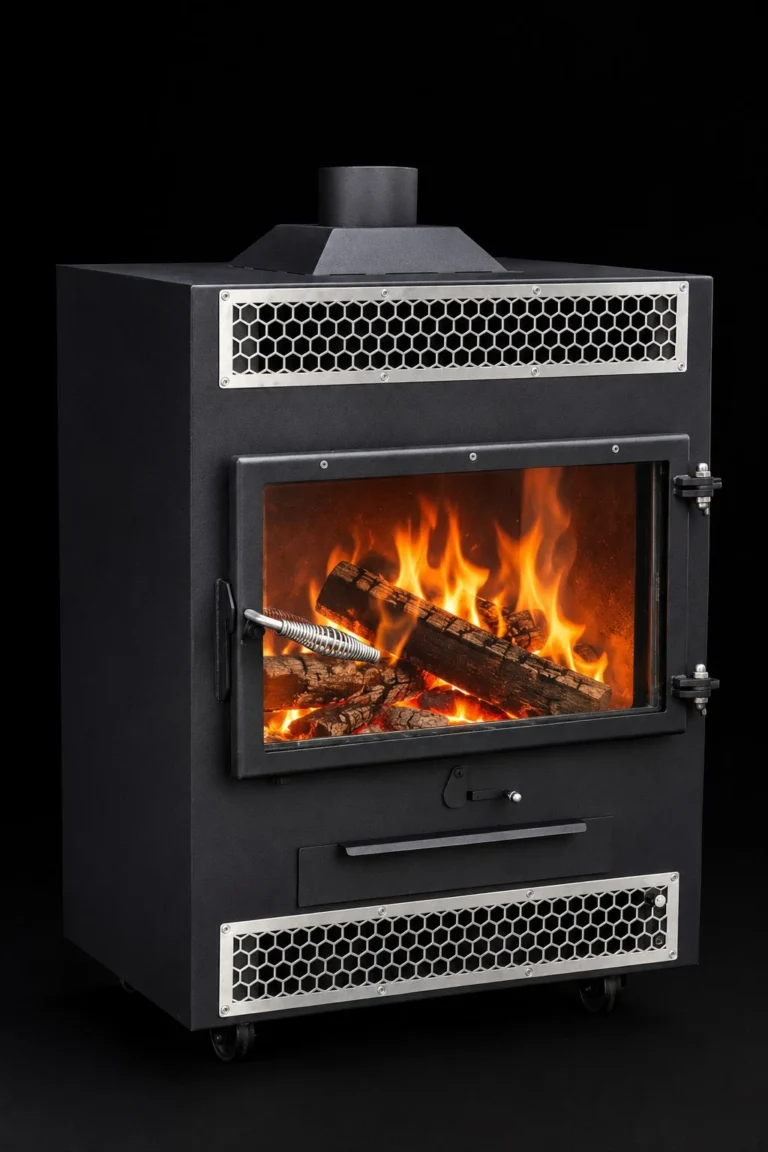
On the 85L cabinet the coals sit in their own bed. The meat cooks above and off to the side, and the fat that renders out drips down onto steel and a water tray, not onto the coals. It drains away before it can burn. The heat still crosses the gap the way charcoal heat always has, as infrared radiation, straight off the glowing coals onto the meat. You never needed fat in the fire to cook. The fat in the fire was only ever making smoke.
That’s why we say low-smoke and not the tidier word people want us to use. We’re not going to claim we erase smoke. A coal fire makes some, and a little clean woodsmoke is part of why grilled food tastes like grilled food. What we cut is the acrid grease smoke. The stuff that comes from your dinner burning a second time.
The flavour you’re actually after
People think the smoke is the flavour. Mostly it isn’t. The taste you’re chasing, that deep brown savoury crust, comes from the Maillard reaction. That’s the browning that kicks in on the surface of the meat somewhere around 140 to 165°C and really starts singing a little above that. Different chemistry entirely from fat charring on a coal. One builds flavour. The other builds soot.
Get the surface into that Maillard window and let the rendered fat drain off, and you get the crust without the bitter edge. Juicier inside, too, because the meat isn’t sitting in a haze of its own dripping. Fewer flare-ups. Less char to scrape off before anyone will eat it.
We’re not going to pretend a shed full of welders discovered food chemistry. We just got tired of smoke and started paying attention. The science had been sitting there the whole time. We only caught up.
The short version
It was never the charcoal. It was the fat hitting the charcoal. Put some distance between the two and most of the smoke leaves with it, along with a good chunk of the compounds you’d rather not eat. Keep the radiant heat. Keep the browning. Keep the bit of clean woodsmoke. Drop the grease cloud.
If you cook over charcoal and you’re tired of wearing the smoke home, come look at our smoke-separating charcoal grills. See the range, tell us what you cook, and we’ll point you at the one that fits.
See the ovens: Smoke-separating 65L · Smoke-separating 85L
Read next: The Konro Grill · Charcoal vs Gas · All Academy guides