Charcoal vs Gas: What Actually Changes
It’s not about taste. It’s about how the heat travels.
People argue charcoal versus gas like it’s a religion. Team smoke, team convenience. Both miss the point.
The real difference isn’t flavor. It’s physics. It’s how the heat actually gets from the fire into your dinner. Once you see that, the whole argument changes shape.
Two fuels. Two completely different ways of moving heat.
Charcoal cooks with light. Gas cooks with hot wind.
Lit charcoal throws off infrared radiation. That’s heat traveling as electromagnetic waves, straight from the coal to the meat, no moving air needed to carry it. Line of sight, like standing in front of an open furnace. The coals run hot too, up past 500°C, and lump charcoal runs hotter still. That fierce, dry, radiant punch is what sears a steak in about ninety seconds.
Gas works more by convection. Hot air circulating under the hood, wrapping the food, cooking it from all sides. Gentler. More even. Easier to babysit.
There’s a catch nobody mentions. Burn propane and you don’t just make heat. One part propane plus five parts oxygen gives you carbon dioxide, heat, and water. Roughly 1.6 pounds of water vapor for every pound of gas. That steam lives in the hood with your food. It’s why a gas grill can leave a burger a little soft on the outside. You’re searing inside a slightly humid box.
The flavor everyone credits to the charcoal.
Here’s where it gets honest.
That smoky aroma you love off a charcoal fire? It isn’t really the charcoal. Good charcoal, once it’s lit and settled, burns fairly clean. The smell comes from your own dinner. Fat drips onto a glowing coal, vaporizes, and rides the smoke back up onto the meat.
Same mechanism gives you the good and the ugly. When that dripping fat burns on the coals it also throws off PAHs, the compounds nobody wants sitting on their food. A meta-analysis comparing gas and charcoal found charcoal put noticeably more of them into the meat, on the order of two micrograms per kilogram of the edible part. Same cut, same fire, more of the bad stuff. Gas runs cleaner here mostly because there’s less smoke and fewer flare-ups.
So it isn’t the charcoal that’s dirty. It’s the fat hitting the fire.
The trade nobody says out loud.
Gas buys you control. Turn a knob, heat is there, no ash, no twenty-minute wait, no wondering whether the fire is dying. For a Tuesday night with hungry kids, that’s the whole ballgame.
Charcoal buys you the radiant sear and the woodsmoke. It also makes you work. It drifts. It fades. You learn to read it.
And the ash is real. You clean it out. You keep the bag dry. You budget the twenty minutes it takes to get the fire going. None of it is hard, but it adds up, and anyone who calls charcoal effortless has clearly not emptied a grill in the rain.
Both can hit the temperature that matters. Browning, the Maillard reaction, kicks in around 140 to 165°C and really hits its stride up to about 200°C. Charcoal’s radiant heat hammers the surface into that range hard while the inside stays gentler, which is a big part of why a charcoal crust tastes the way it does. Push past 176°C for too long and either fuel starts to char and turn bitter. Physics doesn’t care which bag you bought.
So what actually changes?
Neither one wins. They’re different tools for different nights.
Charcoal gives you dry infrared heat and real smoke aroma, at the cost of effort and a little more soot on the plate. Gas gives you an even, humid, hands-off cook that’s kinder on a weeknight and cleaner on the numbers.
We spent years arguing this in the workshop. Then we got tired of arguing and built the thing that does both.
Why we stopped choosing.
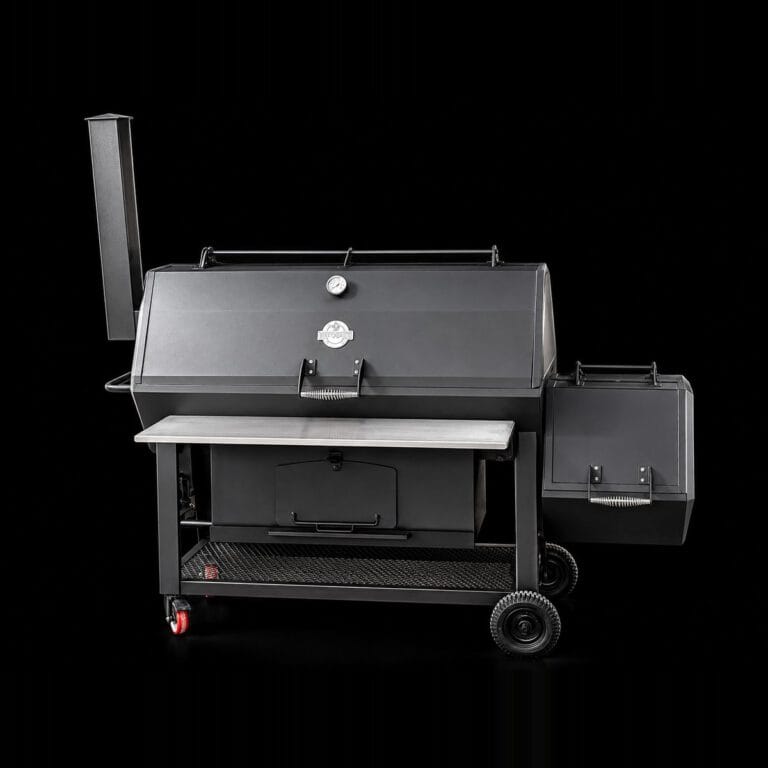
The Hybrid runs charcoal when you want the radiant sear and the smoke, and gas when you just want dinner without the ash. And the smoke-separating design keeps most of the dripping fat off the coals, so you hold onto the good woodsmoke and cut the ugly part. Far less smoke, same char you were after.
That’s why we say low-smoke and not the other word. We reduce the mess. We don’t pretend to erase it.
Have a look at the Hybrid range, and tell us what you cook. We’ll point you at the right fire.
See the ovens: Hybrid 65L (grill + smoker) · Hybrid 85L
Read next: It’s the Fat, Not the Charcoal · Balcony Grilling · All Academy guides