Buying a Charcoal Oven for a Restaurant: A Maker’s Guide
Everybody asks the same first question. How many covers can it do in one service.
Wrong first question.
A restaurant does not kill a charcoal oven on one big Saturday. It kills it on the tenth Saturday in a row. Home grills get lit, get hot, cool down, and sleep for a week. A commercial cabinet lives hot. Lunch bleeds into prep, prep bleeds into dinner, and the steel never really gets to rest.
We build for that. Not the hero night. The Tuesday nobody remembers.
It lives at 300 degrees, so build like it
A working charcoal cabinet holds an internal temperature around 300 to 350 degrees Celsius through a full service. Not for an hour. For years.
Thin steel warps at that duty. It cups, the door stops sealing, the heat leaks, and now your line cook is fighting the oven instead of the food. So the body wants heavy gauge. And the heavy gauge is not there to look tough. It is thermal mass.
Dense steel soaks up heat from the coals and holds it. Commercial flat tops run 10 to 15mm plate for exactly this reason: the thickness tames hot spots. Tested, a heavy steel surface holds its set point to within about five degrees across the whole area, where a thin, light plate can swing four times as much. On a restaurant grate, that difference is the tray of chicken thighs that comes off even instead of half raw at the back.
We learned the gauge the expensive way. Warped a couple of early doors before we stopped arguing with physics.
The batch is only as good as the coldest corner
A home cook grills four things and babysits each one. A kitchen loads the whole grate and walks away for ninety seconds. Those are different machines.
So the number that matters is not peak heat. It is how even the heat is, corner to corner, front to back, top rail to bottom. Charcoal cooks mostly by infrared radiation. The bed glows, the radiant heat runs hot off it, and the steel walls bounce it back onto the food from every side. That is the whole trick of a closed cabinet: the meat sees heat from all around, not just from underneath. You get a sear without flipping every ten seconds.
Load-test the grate before you trust a spec sheet. Same protein, every position, one batch. If the corners lie to you, the spec sheet is lying too.
It is not the charcoal. It is the fat.
Here is the part that decides whether your dining room smells like dinner or like a house fire.
Good charcoal, lit and settled, burns fairly clean. The thick, stinging smoke comes from the food. Every time fat drips onto a glowing coal it does not just hiss. It burns. And burning fat is a different animal from burning wood. Above roughly 200 degrees Celsius the fat pyrolyzes and throws off PAH-laden smoke that settles right back down onto the meat.
The fix is design, not hope. Keep the dripping fat off the coals. Studies that removed the drippings measured the PAHs in the finished meat fall by roughly 48 to 89 percent. Same meat, same fire. Just do not let the fat reach the coal.
That is why a proper cabinet routes fat onto steel or into water and drains it, and pulls the coal off to one side. You still keep the gentle woodsmoke and the Maillard browning that starts around 140 to 165 degrees Celsius. You cut most of the acrid part. That is what low-smoke means, and it is honest: far less smoke, not none. Anyone who promises none is selling.
Fat management is also a labor line. A cabinet you can scrape and drain in five minutes at close is a cabinet your staff will actually clean. One you cannot becomes a grease problem, then a fire inspector problem.
Recovery is the real throughput number
Peak capacity looks great on paper. Recovery is what feeds the room.
Every time you drop cold protein on the grate, the surface temperature sags. Thin steel sags hard and takes minutes to climb back. Heavy steel barely blinks and rebounds in well under a minute, because the mass is holding a reserve of heat the cold food cannot drain fast enough. Across a full service that is the gap between a grate that keeps pace and one that falls behind at the eight o’clock rush.
A closed cabinet also sips fuel. Trapping the radiant heat instead of letting it fly off an open grill cuts charcoal burn by a real margin, on the order of 40 percent less by some measures. Over a year of service, that is a line on your books you can feel.
Size it to your line, not your ego
The last mistake is buying the biggest box in the showroom. A cabinet that runs half empty wastes charcoal and never settles into a rhythm. One that runs jammed backs up your whole pass.
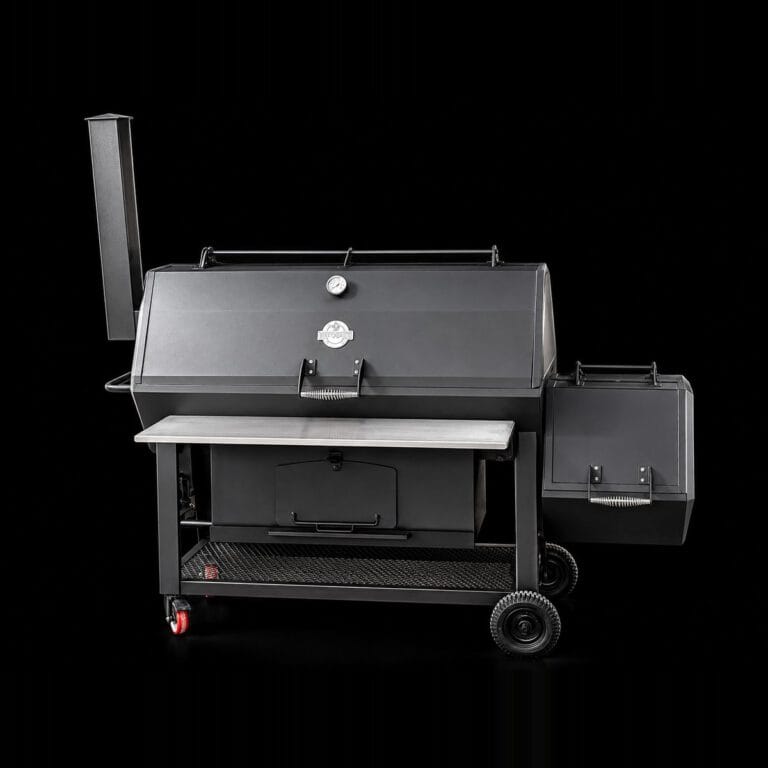
Size it to your actual covers and your actual menu. Skewers want different racking than whole fish. A steakhouse loads heavy and fast; a bistro trickles all night. That is why we build the large cabinets in a few sizes and cut custom when the line calls for it. Better to fit the kitchen than to make the kitchen fit the box.
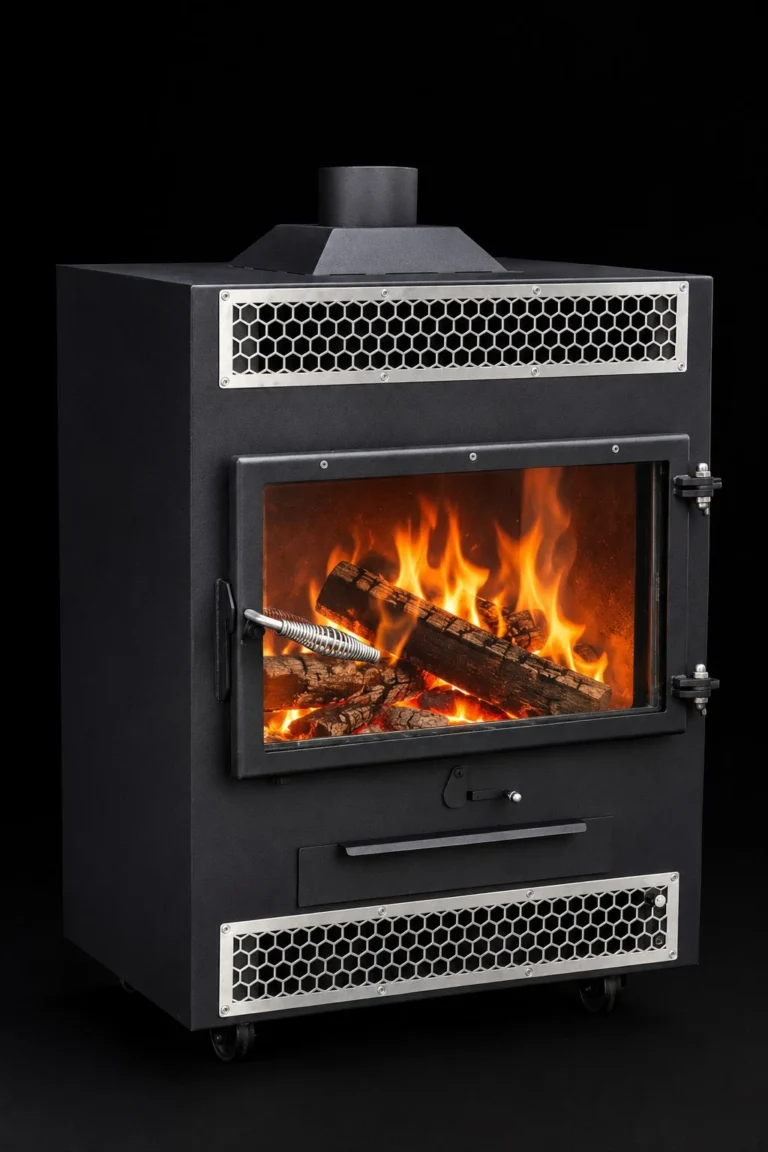
If you run a service and you are weighing a charcoal cabinet, look at the 125L, the 125L Pro, and the 250L. And if none of them match your line, tell us what you cook and how much of it. We will size the steel to the kitchen.
See the ovens: 125L Pro · 250L cabinet
Read next: Offset Smoker Brisket · Balcony Grilling · All Academy guides