Offset Smoker Brisket, Explained by the Fire
Brisket is a waiting game with one honest rule
Low and slow scares beginners because it looks like nothing is happening for hours. That is the whole trick of it. Nothing is exactly what is supposed to happen. Brisket is one of the toughest, most stubborn cuts on the animal, packed with connective tissue that any hot-and-fast fire turns to shoe leather. You are not really cooking it. You are melting it. And melting takes time you cannot rush.
We learned that the slow way. The first few briskets off the offset came out dry as a plank, because we kept poking, kept lifting the lid, kept chasing a number on the probe. Then we shut up and let the fire do its job.
It is not the meat that is tough. It is the collagen.
Brisket is loaded with collagen, the connective tissue that holds a hard-working muscle together. Cook it fast and that collagen seizes and wrings the water out. Cook it slow and something better happens. Around 71°C internal, collagen begins turning into gelatin. That is the soft, rich part everyone is after. But it is slow, and it keeps happening the whole way up, which is why we pull a brisket well past the point it is safe to eat, somewhere around 93 to 96°C internal. Not because it is raw at 75°C. Because the collagen is not done surrendering yet.
You will read “203°F” everywhere. It is a fine target. But the real tell is not the number, it is the feel. When your probe slides in like it is going through warm butter, the fat has rendered and the collagen has let go. Trust the wiggle over the thermometer.
The stall will make you panic. Do not.
Here is the one that breaks first-timers. About four hours in, your brisket climbs to roughly 65 to 71°C internal and then just… stops. For hours. You will swear the fire died. It did not.
That plateau is called the stall, and it is not a fault. It is physics. As the meat heats, moisture wicks to the surface and evaporates, and evaporation pulls heat away, the same reason sweat cools your skin on a hot day. For a long stretch the heat leaving the surface balances the heat your fire is pushing in, so the number sits dead still. The fire is still cooking. The collagen is still melting. The clock is doing exactly what it should.
You can wait it out, or wrap the brisket in foil or butcher paper to cut the evaporation and push through faster. The Texas crutch, folks call it. Either works. What does not work is cranking the fire in a fright. That is how you dry out dinner.
The smoke ring is a bragging right, not a doneness gauge
Slice a good brisket and you will see a pink band sitting under the bark. Beginners take one look and think undercooked. It is not. That ring is chemistry, not temperature.
Nitric oxide from your burning wood and charcoal reacts with myoglobin in the meat and locks it pink, a compound called nitrosomyoglobin that holds that color even when fully cooked. The catch is that the reaction only happens while the surface is still cool, so the ring is basically set by the time the meat passes about 60°C internal. It looks great. It tells you the fire was clean. But it says nothing about whether the middle is tender. Chase the feel, not the ring.
Thin blue smoke. Learn to read the chimney.
The most useful thing a beginner can learn off an offset is to watch the smoke instead of the meat. You want thin blue smoke, so faint it is almost invisible coming off the stack. That is a hot, clean-burning fire with plenty of air, and it lays down the gentle, sweet layer everyone is chasing.
Thick white or grey billow is the enemy. That is a smoldering, air-starved fire throwing off soot and acrid creosote, and once that bitterness soaks into the meat there is no washing it back out. So the fix is not more wood. It is more air and drier, seasoned fuel. A small clean fire beats a big dirty one every time. Keep the smoke thin and blue and half the battle is already won.
So, your first brisket
Steady pit around 110 to 120°C. Thin blue smoke off the stack. Ride out the stall without touching a thing. Wrap if you are impatient, leave it bare if you are not. Pull it when the probe slides like butter, not when a number tells you to. Then rest it, still wrapped, a good hour before you cut. That resting step matters as much as the cook, and it is the one everyone skips.
It is a long day, and your first one will probably run a little dry. Ours certainly did. The fire teaches you faster than any recipe ever will.
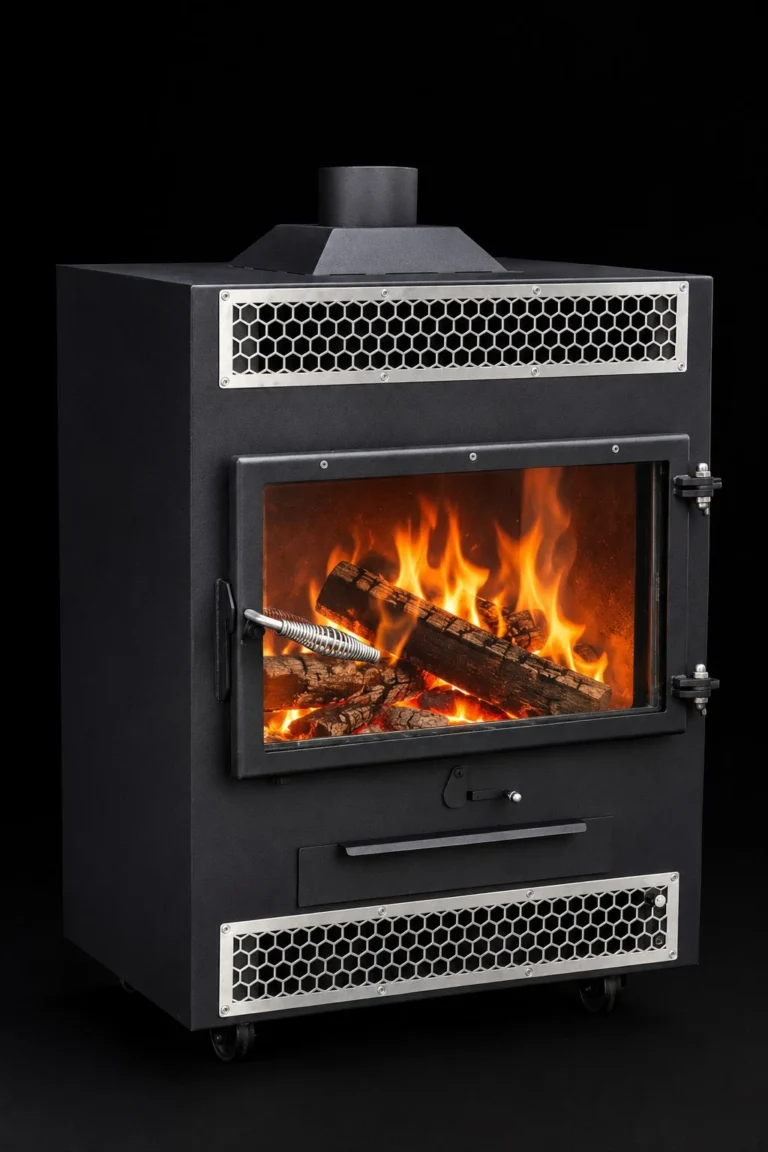
When you are ready to run one properly, our Offset Smoker range (9045, 10050, 15070) is built for exactly this low-and-slow work. See the range, and tell us what you like to cook.
See the ovens: Offset Smoker 9045 · Offset Smoker 15070
Read next: Commercial Charcoal Ovens · It’s the Fat, Not the Charcoal · All Academy guides